
Case Study: airBaltic
Streamlining the transition to smart documentation for airBaltic
The collaboration in brief
- airBaltic, the Latvian flag carrier, set out to replace its legacy HTML and PDF based documentation system with Yonder.
- The migration covered a content library of around 400 documents, ranging from large, complex operations manuals to short administrative forms. The project had to be completed within roughly 3.5 months from kick-off to go-live.
- A focused project team of five people from the Documentation Office and IT, supported closely by Yonder’s customer team throughout, kept the migration on schedule. There were no regulatory complications along the way.
- airBaltic went live on time, with crew able to familiarize themselves with the Yonder app ahead of launch. The team is now looking to expand usage across the entire organization.

Background
airBaltic, the Latvian flag carrier, manages a comprehensive content library spanning operations manuals, company documents, and forms that serve crew and staff across the entire airline. When the airline made the decision to move from a legacy HTML and PDF based documentation system to Yonder, the team faced a clear challenge: migrate around 400 documents, ranging from large, complex manuals to short, simple forms; all within a tight deadline, without compromising compliance or disrupting day-to-day operations.
The Challenge
The airBaltic documentation library presented migration complexity on two fronts: volume and format. With approximately 400 documents to transfer, the team needed to work through everything from multi-section operations manuals to straightforward administrative forms. The primary technical challenge was the conversion of legacy HTML documents into Yonder’s structured XML format. A process that proved more demanding than initially anticipated.
The timeline added further pressure. With roughly 3.5 months from project start to go-live, there was little margin for course correction. At the same time, many manuals had planned revisions scheduled around the migration window, requiring the team to carefully coordinate the timing of each document’s transfer to avoid conflicts between legacy revision cycles and the new system.
Regulatory risk was managed proactively. The airline’s Civil Aviation Authority was supportive throughout, and airBaltic experienced no regulatory complications during the transition. An outcome that reflects both thorough preparation and close coordination with their authority.
Documents migrated
Months from kickoff to go-live
Person core project team
The Approach
Prioritising what matters most
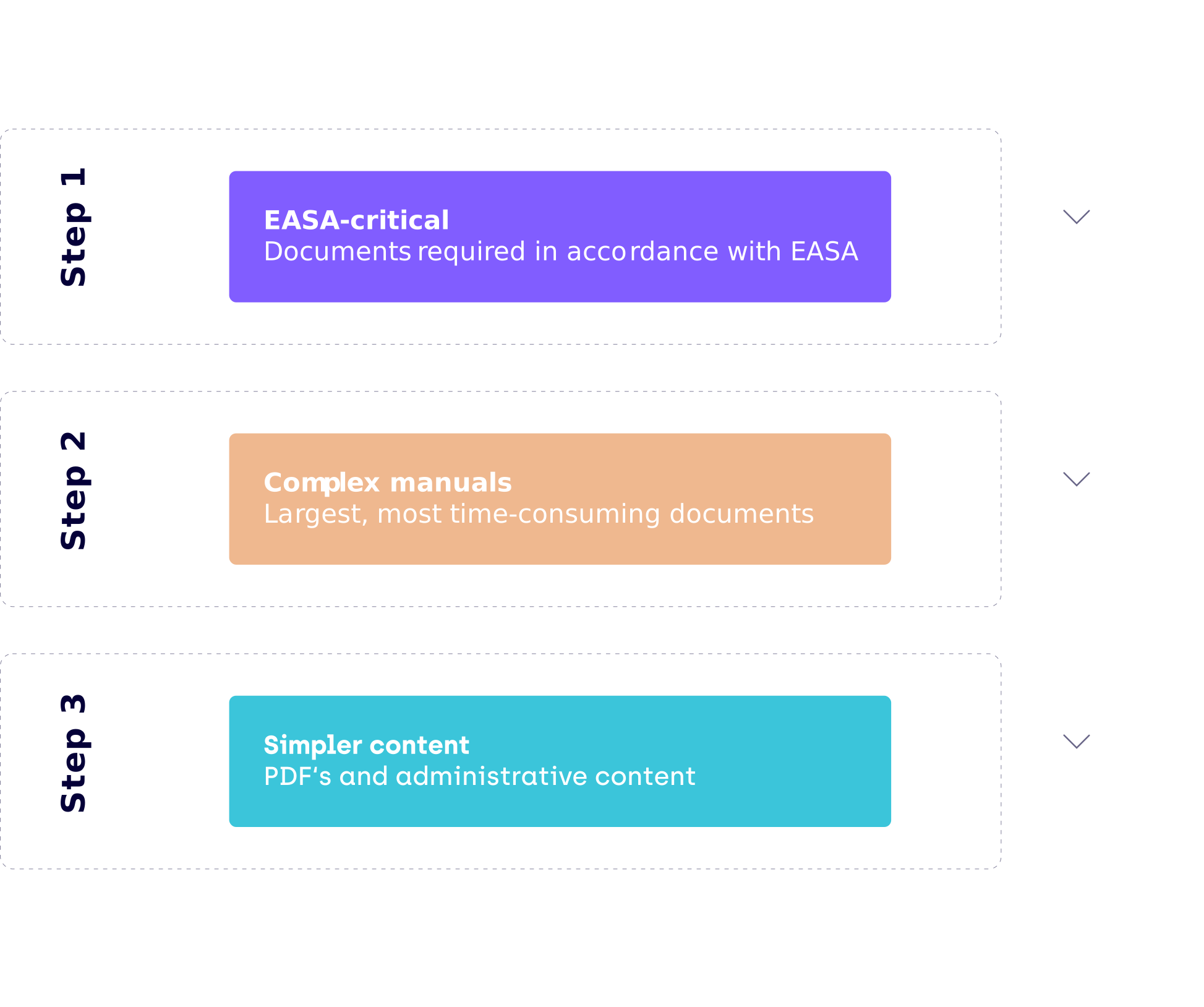
The airBaltic team structured the migration around clear priorities. Critical documents required in accordance with EASA came first. From there, the team worked through the most complex and time-consuming manuals before turning to simpler PDF-based materials. Planned revision dates for each document were factored in throughout, ensuring that no manual was migrated at a point that would create compliance gaps or duplicate effort.
A focused project team
Rather than distributing decision-making broadly, the airBaltic project team kept authority concentrated. Taking advice from Yonder’s Chief Customer Officer, Beat Reusser, who recommended limiting the number of people involved in major decisions, a core team of five people from the Documentation Office and IT took ownership of the project. This structure allowed critical decisions to be made quickly and kept the project on schedule during a demanding timeline.
Configurations and workflows
During onboarding, airBaltic set up role-based access tailored to different user groups across the airline and workflows for different document types where configured following Yonder’s recommendations. Getting this groundwork right was later identified by the team as one of the most important factors in a successful go-live.
Yonder’s throughout support
Yonder’s customer team was present throughout the migration, providing consistent support across the project. The involved team members were described by airBaltic as being available almost around the clock, always calm, and always constructive. That continuity of support was recognised as central to the project’s outcome.
The Results
airBaltic completed the migration and went live on schedule, approximately 3.5 months after the initial kick-off meeting. All necessary documents were available in Yonder by go-live date, and crew members had the opportunity to familiarize themselves with the Yonder app in advance of the official launch.
The team acknowledges that not everything was perfect on day one, and deliberately chose not to wait until it was. As the airBaltic team put it: if you only go live when everything is perfect, you never go live. The ability to launch with confidence, knowing that critical documentation was in place, reflected the team’s pragmatic approach.
One outcome that stood out as a positive surprise was the attitude of colleagues across the organization. The willingness of staff to embrace the change, and to accept the temporary inconveniences that come with any major system transition, made the migration considerably smoother than expected.
What took longer than anticipated was the post-migration clean-up of documents converted into XML format. The structural work required to ensure quality across all migrated content proved more involved than the team had initially projected. A reality that airBaltic now passes on as practical advice to any airline considering a similar project.
If you only go live when everything is perfect, you never go live.
Alla Grante
Head of Flight Operations Support and Development at airBaltic
Looking Ahead
airBaltic is looking to expand Yonder usage beyond its initial scope, with plans to roll out the platform across all company departments. Because Yonder’s pricing is based on aircraft count rather than user licenses, this expansion carries no additional per-user cost. A commercial model the team highlighted as well-suited to airline-wide adoption.
The team is also looking forward to making full use of Yonder’s XML capabilities for processing aircraft manufacturer documentation, including the largely automated handling of OEM revisions from Airbus and other manufacturers.
Advice to Other Airlines
Based on their experience, the airBaltic team offers three practical recommendations for airlines approaching a similar transition to a smart content management platform:
Allow more time than you think you need
The migration itself can move quickly, but post-migration clean-up and verification takes longer than most teams anticipate. Build that buffer in from the start.
Think through roles and workflows early
The structure you define before migration, who sees what, and how changes flow through the organization, shapes everything that comes after. It is crucial getting this right before content starts moving.
Invest in user training and documentation
The airBaltic team found that what seemed self-explanatory in the app often required more detailed guidance than expected. The more thorough the instructions and training provided to users, the better the adoption. Involving crew in app testing before go-live is strongly recommended.